By Nia Saunders
“We’re hiring…kind of.” It’s the ultimate American vision. After graduating high school, attending college and achieving a degree, the dream is to find a comfy job that can support oneself and a middle-class lifestyle. However, this is not always the case for college graduates now. More than just a diploma is being asked of millennial college graduates in order to land a steady income and a cubicle. Even with four to five years of college education and a bachelor’s degree, why is it that millennials are having a harder time finding jobs?
A study from the Georgetown center revealed that 63% of college graduates with internship experience received a job offer directly out of college. On the other hand, only 35% of their peers without internship experience received a job offer. This is problematic when college graduates take the term “entry level” too literally when applying for a job.
According to Forbes, the 5.4% national unemployment rate is the lowest it’s been since 2008. While this is good news, the truth of these numbers is that 44% of college graduates are stuck in jobs they are overqualified for. Also, the number of college graduates making less than $25,000 is the highest it’s been since the 90s.
This has created a new epidemic: the gig economy. The gig economy is made up of independent people working contract jobs such as delivery drivers, construction, freelance media and photography, and transportation. When the economy lacks high-paying jobs the younger, much too qualified graduates must turn to jobs like these. Without being able to rely on a steady income, the looming task of paying off student debt becomes nearly impossible.
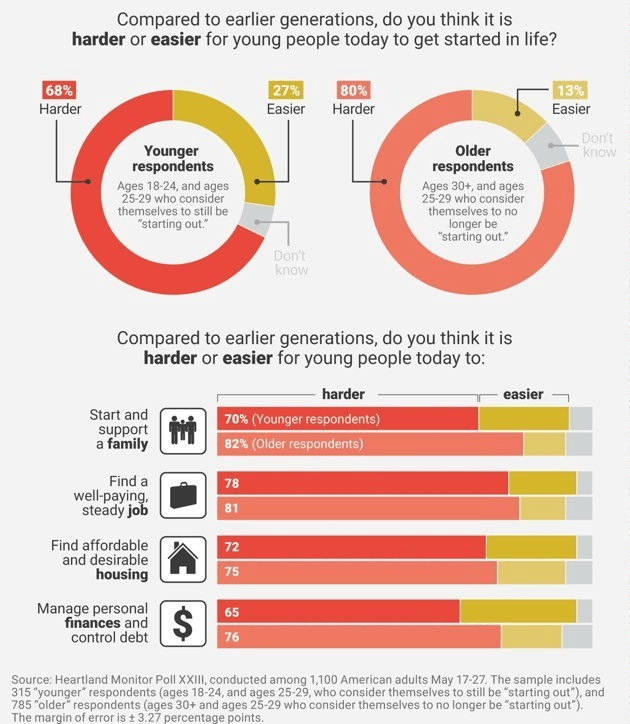
The underlying consensus is that millennials are having a hard time landing jobs and creating a lifestyle for themselves. This may mean the economy may be to blame. As of 2018, Americans owe $1.48 trillion in student loans and the number is rising. The unspoken promise given to incoming college students is that a debt obtained from college will easily be paid off later with a nice job. The problem is the economy simply isn’t creating jobs that are matching the skillsets of college graduates.
While the solution to this problem will entail long-term initiatives and government policy changes, it is important for local programs and businesses to help relieve millennial unemployment.
Sources:
Stahl, Ashley. “The 5.4% Unemployment Rate Means Nothing For Millennials.” Forbes, Forbes Magazine, 7 Aug. 2015, www.forbes.com/sites/ashleystahl/2015/05/11/the-5-4-unemployment-rate-means-nothing-for-millennials/#18ef12e22e07.
“U.S. Student Loan Debt Statistics for 2018.” Student Loan Hero, https://studentloanhero.com/student-loan-debt-statistics/.
Gutterman, Amanda. “5 Solutions To The Youth Unemployment Crisis You Probably Haven’t Thought Of.” The Huffington Post, TheHuffingtonPost.com, 25 Oct. 2014, www.huffingtonpost.com/2014/10/25/youth-unemployment-solutions_n_6044310.html.
Shadpour, David. “The Gig Economy: Pioneering The Future.” Forbes, Forbes Magazine, 22 Jan. 2018, www.forbes.com/sites/forbesagencycouncil/2018/01/19/the-gig-economy-pioneering-the-future/#5d9a04eb634a.
 sans CV
Leave a comment